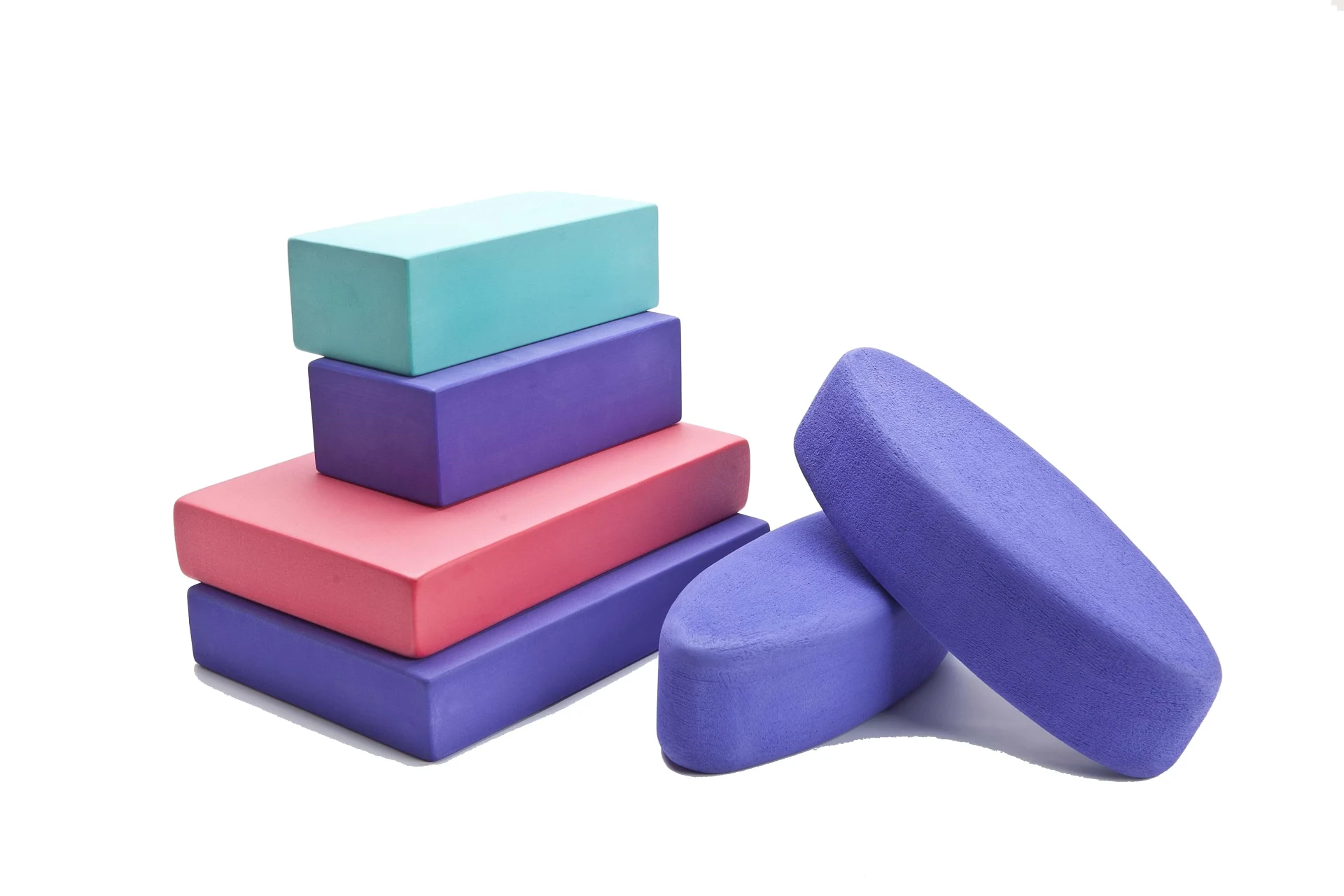
The Material Debate: Why High-Density EVA Yoga Blocks Are the B2B Standard
For wholesale yoga product buyers, gym distributors, and private label fitness brands, choosing the right yoga block material is not just a design decision , it is a supply chain and profit strategy.
While cork and wood (bamboo or birch) yoga blocks have gained popularity in eco-conscious and boutique retail segments, the high-density EVA yoga block remains the dominant choice for large-scale B2B distribution.
At EVA Foam Industry, we manufacture millions of yoga blocks annually across our Taiwan and Vietnam facilities. Based on real production data, export logistics, and OEM experience, here is why EVA continues to deliver the highest ROI for wholesale yoga block buyers compared to cork or wood alternatives.
1. Logistics & Freight: The Weight of Your Investment
In the wholesale fitness accessories business, you are not only paying for the product , you are paying for freight, storage, and handling. Shipping efficiency directly impacts landed cost and profit margins.
Wood / Bamboo Yoga Blocks
- Extremely heavy
- Containers reach weight limits long before volume is fully utilized
- Higher freight cost per unit and lower container efficiency
Cork Yoga Blocks
- Heavier than foam
- Prone to chipping during transit without reinforced packaging
- Increased protective material and packing costs
- Lightweight yet structurally strong
- Maximize container volume (FCL) without weight restrictions
- Lower damage rates during international shipping
Bottom Line:
Sourcing EVA yoga blocks from our Vietnam factory enables maximum container density and lower shipping cost per unit, offering a clear advantage over cork or wood yoga blocks.
2. Hygiene & Maintenance in Commercial Environments
For buyers supplying commercial gyms, yoga studios, hotels, and wellness centers, hygiene is often the number one procurement requirement.
The Porosity Problem
Cork and wood are naturally porous materials. Over time, they absorb sweat, oils, and bacteria. In high-traffic studios, this can lead to:
- Persistent odors
- Visible stains
- Shortened product lifecycle and frequent replacement
The EVA Advantage
High-density EVA foam is a closed-cell foam material:
- Does not absorb moisture or sweat
- Easy to clean with commercial disinfectants
- Maintains surface integrity after repeated cleaning cycles
For studio operators, EVA yoga blocks represent a long-term, hygienic investment. Cork and wood blocks often become consumable items due to sanitation concerns.
3. OEM Flexibility: Branding, Density & Custom Design
Customization is a critical factor for OEM yoga block manufacturing and private label branding , and this is where EVA significantly outperforms cork and wood.
Limitations of Cork & Wood Yoga Blocks
- Limited natural color options
- Minimal branding flexibility
- Fixed hardness and surface feel
OEM Advantages of EVA Yoga Blocks
- Color Matching: Any Pantone (PMS) color for brand identity or seasonal collections
- Custom Shore Hardness:
- Recommended range: Shore C 40–55 for professional yoga blocks
- Firm support without collapsing
- Comfortable for joints and kneeling poses
- Surface & Logo Options:
- Non-slip or brushed textures
- Laser-engraved or embossed logos for long-lasting brand visibility
Cross-Sell Opportunity:
Many wholesale clients pair custom-colored EVA yoga blocks with our foldable TPE yoga mats to create cohesive, travel-friendly yoga accessory sets for retail and online channels.
4. Durability & Impact Resistance
In warehouses, retail stores, and global shipping environments, yoga blocks are frequently dropped or compressed.
Wood Yoga Blocks
- Can crack or splinter if dropped
- Potential safety risks from sharp edges
Cork Yoga Blocks
- Prone to corner crumbling and material fatigue
- Gradual degradation over time
- Excellent impact resistance and shape recovery
- Bounce-back performance under compression
- Designed for long-term commercial and retail use
Our industrial-grade EVA foam ensures dimensional stability and consistent performance, outperforming low-end foam yoga bricks commonly found in price-driven markets.
5. Cost Efficiency & Supply Chain Advantages
Wood and solid cork yoga blocks rely on raw material availability, leading to higher unit costs and limited scalability.
EVA Foam Advantages
- Cost-effective mass production for wholesale orders
- Stable material supply
- Consistent quality across large volumes
Tariff & Trade Benefits
By manufacturing in Vietnam, EVA Foam Industry supports a China Plus One sourcing strategy. For many US and EU buyers, this can:
- Reduce exposure to anti-dumping duties
- Improve supply chain resilience
- Increase overall profit margins for wholesale yoga products
Conclusion: The Smart Wholesale Choice
While cork and wood yoga blocks have their place in niche lifestyle markets, the high-density EVA yoga block remains the most efficient and scalable solution for B2B buyers.
It offers the optimal balance of:
- Shipping economy and logistics efficiency
- Hygienic performance for commercial environments
- Extensive OEM customization
- Durability and cost control
Ready to upgrade your yoga accessory portfolio?
Contact EVA Foam Industry today to discuss OEM EVA yoga block specifications, Shore hardness options, and container pricing from our Taiwan or Vietnam manufacturing facilities.